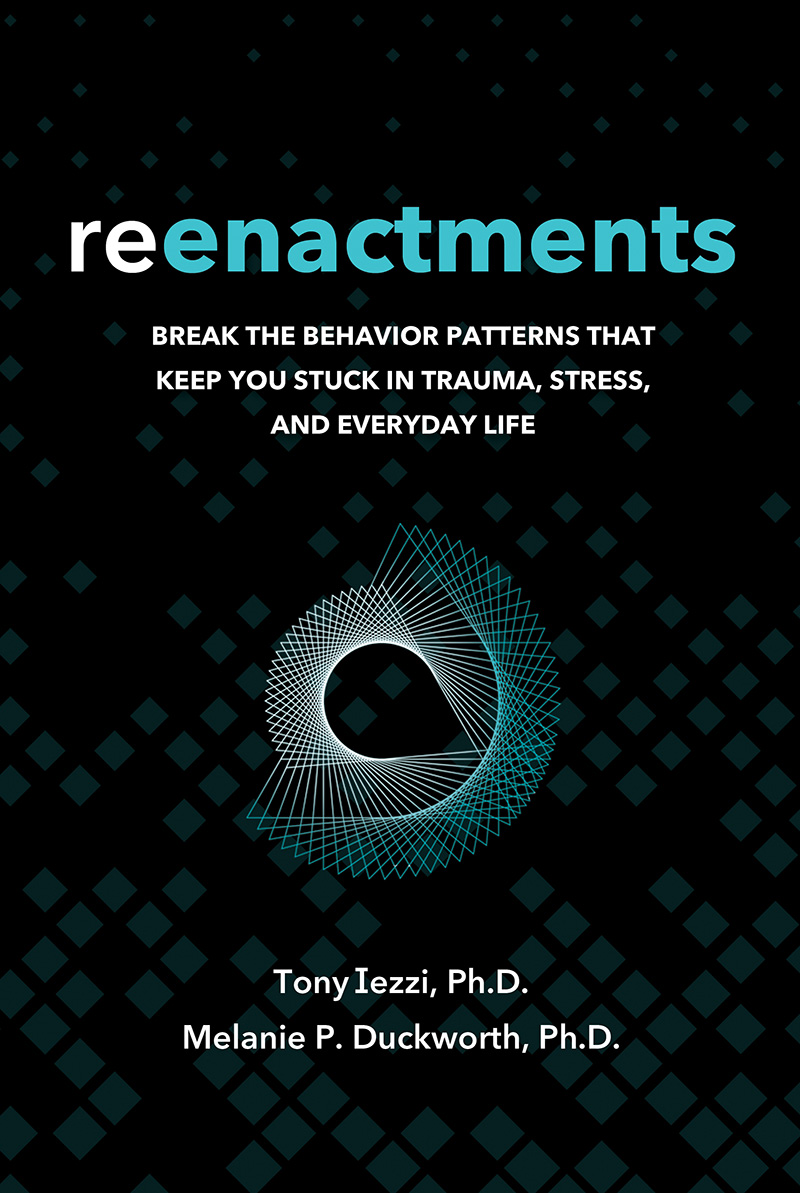
Many of us understand the importance of improving our well-being both in the present and in the future. While the past cannot be changed, this book emphasizes that we have the capacity to break free from the traumas and recurring patterns that can restrict our happiness or limit our growth. Personally, I am always looking for guidance and strategies to have some relief (or even just a break) from the emotional and physiological challenges tied to my own long history of personal trauma.
The term reenactment carries significant weight, and I admit I did not fully grasp its meaning until reading this book. Fortunately, the authors provide clear definitions early on, establishing a solid foundation for the key concept, which is: A reenactment is a person’s specific pattern of brain, body, and behavioral responses to traumatic and everyday experiences. A reenactment is also a person’s learned perception of and response to threat.” A reenactment also has significant physical and psychological consequences that eventually threaten a person’s survival.
A central theme of the book is the power of training ourselves to recognize recurring patterns as they arise, which can allow us to break these cycles. With practice, I have come to know that this self-awareness can be genuinely transformative.
In reading this book, I have come to appreciate that avoidance is a coping mechanism. It is not easy to break this habit, but the book offers practical approaches for tracking our personal stories, making it easier to identify themes that trigger distress. With this mindful practice, I can now manage some of these moments more effectively, and with the hope that over time, some triggers may not impact me in such a dramatic way.
The authors’ suggestions for managing reactions through recognizing common themes are particularly valuable. I am actively working on developing a new habit of pausing when I experience a strong emotional response to something. I can gradually work on creating positive change by recognizing and redirecting old patterns or “light-ups,” such as my racing heart or tears welling in my eyes, and asking myself mindful questions like: Is this a familiar theme from the past? Do my surroundings resemble a place where I once felt unsafe? Is there a smell or certain weather that reminds me of a traumatic event? These suggestions and ideas have helped increase my self-awareness. The process of interrupting reenactments is empowering, something I had not considered before working with Dr. Iezzi and reading this book.
A key quote that I have written down as a daily reminder is that “becoming aware of our reenactments, or habitual ways of feeling, doing, and being, allows us to consider how to break free from these limiting patterns.”
After reading this book, I feel motivated to do the work necessary and take concrete steps toward healing and being less triggered by the difficult events of my past. The Key Summary Points at the end of each chapter provide simple recaps and practical takeaways to consider, such as regularly reviewing or writing down significant stories or experiences that have paralyzed me in many moments. With this, I can gradually work on creating positive change by recognizing and redirecting when old patterns or light-ups occur.
I am excited about the possibilities that can come from me doing this kind of work and would highly recommend this book to anyone seeking to overcome the negative effects of past traumas and move toward a happier and fulfilling life.
Coralie Waschkowski
Specialized Business Banker, Royal Bank of Canada