Every few years, a new model of psychotherapy arrives that reflects what we know about human psychology and how to use that knowledge to help us to better help ourselves. For clinicians, it also means how to help our patients better. The basic model is understanding how your past controls your present life and how you can break free of the patterns it creates.
This has been the case since the early years of psychotherapy. In the 1920s and 30s, Alfred Adler wrote books to help us with our “life tasks” and “lifestyle”. In the 1960s, Eric Berne taught us about “games people play” and “life scripts”. At the turn of the century, Jeffrey Young helped us to understand our “schema domains” and “maladaptive schemas”. Each used the research known at that time, but then combined it with their extensive clinical experience to develop a new way for us to understand our lives and how to change them.
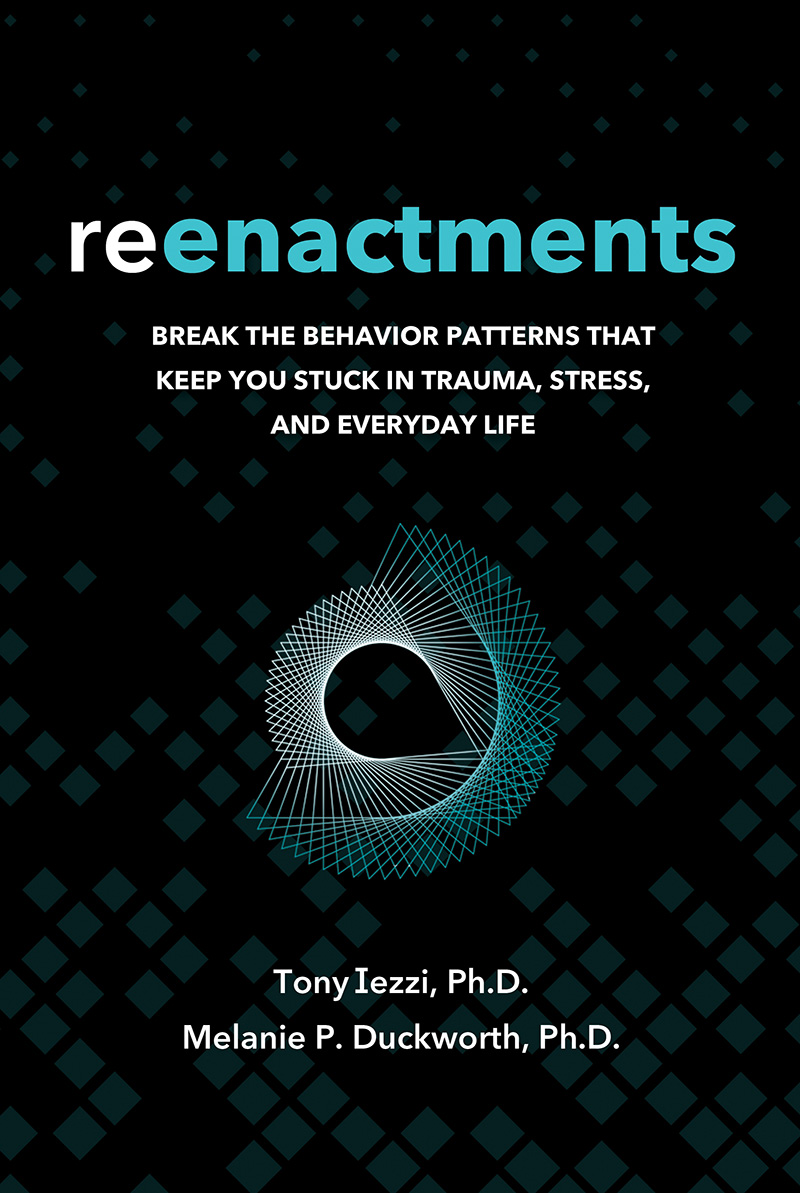
The latest work by Tony Iezzi and Melanie Duckworth continues in that tradition. Building on decades of their own experiences in working with clients with PTSD, they describe how “reenactments” (a individual pattern that we have of our unique brain, body, and behavioral responses to both our traumatic experience and to our everyday lives) can center around central themes, will have consequences on us both physically and psychologically, and how we can break those patterns to live a more healthy life.
“Reenactments” reflects both their deep understanding and appreciation of a broad range of scientific research and their many, many years of clinical experience in working with clients with some of the most complex and challenging lives following from their histories of traumatic abuse or harrowing personal loss.
That depth is evident in every page of this book. Iezzi and Duckworth weave in personal stories from their decades of clinical experience throughout the book, using these stories
to help us see ourselves. But they also weave in research from neurobiology, cognitive science, and basic human behavior to guide us to understand what is happening.
This can sound as if one needs to be a doctor to read it, far from it. One of their gifts is their capacity to write about complex issues and cutting-edge research in a way that is clear to anyone who might be sitting across from them in therapy – in a way that we can see how all of these things are a part of our daily lives.
The book is divided into three parts. The first part aims to help us understand what reenactments are, how they are a part of all of our lives, how to recognize them, and their impacts on how we live our lives. The second part aims to help us understand how reenactments can be maintained or broken, along with strategies to help us see these reenactments so we can act on them. The third part aims to help us see these changes as part of a new, healthier way to live our life and then finishes with a discussion of how these changes can have an impact beyond ourselves and affect our communities, both small and large.
However, what elevates this book from an interesting read to one that offers valuable insights into our lives is the way each chapter concludes. Mirroring the work of a good therapy session, the authors offer key summary points at the end of each chapter. Then, reflecting what they have learned from their work with hundreds of clients, they give the reader “Steps to Getting Unstuck.” These are practical exercises to help us use the information in our lives. As with good psychotherapy homework, they make sense, are challenging, but are doable.
While the audience for this book is primarily people living with PTSD, many other people will find it helpful as well. As Iezzi and Duckworth point out, reenactments are common in the lives of people challenged by a range of mental health issues.
However, this book can also be helpful for professionals who work with clients with PTSD. As with any good writing by knowledgeable professionals, Iezzi and Duckworth provide valuable insights to help clinicians better understand their clients, conceptualize their problems in a new way, and add tools to their therapy toolbox.
Iezzi and Duckworth’s “Reenactments” is a book that comes from our history, expands our current understanding, and will help people far into the future.
Ian R. Nicholson, Ph.D., C.Psych.
Former President of the Canadian Psychological Association