

Key Takeaways
- Triggers can be almost anything that leads to a strong emotional reaction and can happen to anyone.
- Triggers are part of reenactments occurring in traumatic and non-traumatic circumstances.
- With awareness, identifying specific reenactment themes helps determine a person’s sensitivities in the present, which are influenced by past experiences.
- Journaling and performing a W5 (who, what, where, when, and why) will identify reenactment themes and assist in determining specific strategies to manage them.
Most people know about triggers. Trigger warnings are common when watching TV, reading a book, or listening to a lecture. These warnings usually point to potentially traumatic experiences that could be upsetting. However, most people don’t realize that triggers can also occur in everyday situations and can even affect those without a trauma history. The main goal of this article is to review different triggers, raise awareness about them, and provide guidance on how to identify them.
Triggers
A trigger is a stimulus that prompts someone to recall an emotionally intense experience. A person’s past influences how they perceive whether an experience is good or bad, and triggers lead them to remember or relive that response in the present. From an evolutionary standpoint, we tend to remember negative experiences more distinctly than positive ones because avoiding harmful situations improves our chances of survival.
Anyone can be triggered. Triggers are almost anything that activates a physical and psychological response to various events. A survivor of a car crash might associate several triggers with their family members’ death, such as the first snowfall of the year, November, below-freezing temperatures with blowing snow, driving on a rural road, and red pickup trucks (like the one that hit them). However, we can also be easily triggered in everyday life, often without realizing it. More on this later.
A trigger can be external or internal. An external trigger might be a person, place, thing, or situation that causes a reaction. Examples of external triggers include familiar physical cues such as sights, sounds, smells, and tastes. For instance, a song could remind someone of their first date or breaking up with a romantic partner. The taste of alcohol might bring back the memory of a fun night out with friends or of feeling sick and passing out. Similarly, the smell of a particular cologne might evoke memories of being affectionately embraced or inappropriately touched by someone.
Anniversary dates, an external trigger, can evoke positive and negative emotions. For instance, the wedding anniversary, the start of a new business, or a birthday may bring back happy memories. In contrast, the date of a divorce, the date a company filed for bankruptcy, or the anniversary of a loved one’s passing can trigger painful emotions.
Feelings, sensations, and thoughts can be internal triggers, too. For example, being mistreated by others can trigger feelings of helplessness and powerlessness.
When a situation prompts memories of a traumatic event, a person may easily realize they are being directly exposed to a trigger. For example, if a car drifts into its lane on an icy road, it can evoke the memory of a head-on collision. However, recognizing triggers from different but thematically similar experiences to the trauma can be more challenging. For instance, a stressful end-of-day meeting with the boss, a car ride with an overly assertive date, being stuck in traffic, or undergoing an MRI scan may also evoke memories of the traumatic head-on collision because each situation triggers the trauma response of feeling trapped and helpless.
Reenactments
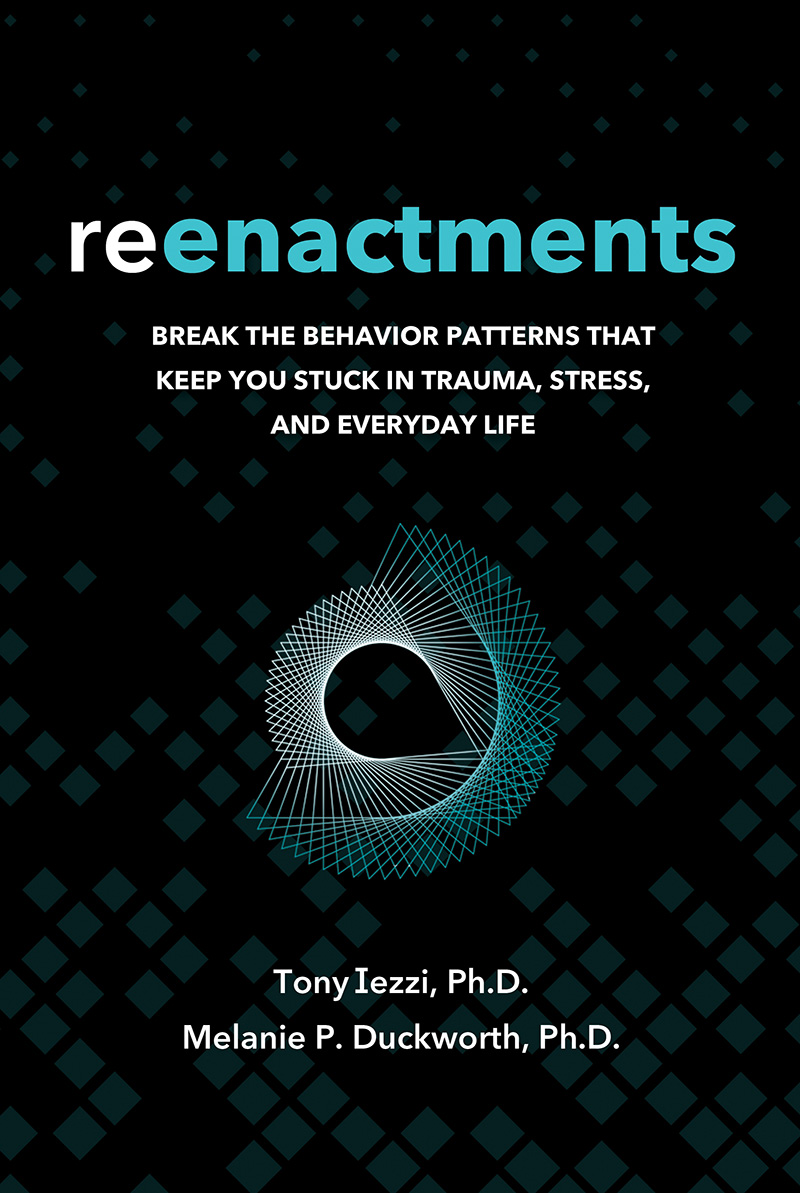
Triggering themes don’t occur on their own; they are part of a complete experience. Triggering themes appear in all reenactments. A reenactment is a person’s specific pattern of responses from the brain, body, and mind to traumatic and everyday experiences.1 It is a response to a perceived threat. We all experience reenactments every day, many times daily, but we usually don’t notice them. Reenactments are learned behaviors that begin in childhood. We haven’t been taught to recognize them or take action against them. In fact, we often repeat these learned behavior patterns into adulthood with the same results. To create more positive outcomes in our lives, we need to recognize reenactments and the themes associated with them.
Thematically-Linked Common Denominators
A reenactment theme is a central topic, idea, emotion, feeling, role, or communication that we identify with in a given experience that connects to other experiences over time.2 Based on our perception of an experience, reenactment themes encompass a wide range of concepts and are almost unlimited in variety. In trauma experiences, triggers are usually clear and tangible, whereas reenactment themes might not be recognized until later, after some introspection. In the prior example of someone being injured in a car crash, it’s evident that the collision is the feared stimulus that triggers an intense physiological reaction. What are the reenactment themes of that trauma? Feeling helpless and powerless in this trauma might be obvious, but what about feeling stupid, incompetent, and guilty?
To identify a reenactment theme, we describe the event in chronological order, including who was involved, what happened, why it happened, and the emotions, feelings, and thoughts that occurred during and after the experience. We refer to this analysis as performing a W5 analysis.3 We do an analysis that examines who, what, where, when, and why an event occurred.
For example, Roger is a 20-year-old man who works as a hospital porter. He takes his job seriously and tries to treat everyone with respect. However, he has a history of being taken advantage of because he is a friendly and caring person. He describes an incident with a belligerent patient that happened late in the day. The patient was angry with him because he made them wait a long time to be transported home. An argument lasting about a minute took place. Roger’s W5 of the incident would be: who—the patient; what—the argument with the patient; where—the hospital lobby; when—late in the day; and why—Roger has a history of being sensitive to injustice, feelings of inferiority, and humiliation. Although the disagreement lasts a minute, he continues to stew over the experience until the next day: What’s wrong with me? Who does he think he is? Next time, I’ll tell them they are being rude.
After exploring the reenactment experience, we then move on to a symbolic interpretation of the potential themes that are activated. Common themes seen in reenactments include loss, powerlessness, lack of control, love, shame, feeling unwanted, dependence, incompetence, the need for approval, abandonment, betrayal, and entrapment. Understand that a reenactment theme is never exact or absolute. When a reenactment is interpreted well, it usually leads to an “aha” moment. Additionally, when using the nest strategy to address a reenactment, it often brings relief.
Reenactment themes are personal and unique to each individual. Similar situations might not trigger the same emotional response in everyone. Each person’s background and childhood experiences shape how they respond. However, recognizing reenactments by itself doesn’t eliminate them. You have to do something different to feel different.
It should be noted that people initially resist interpreting reenactments and reenactment themes. When they experience something, they tend to react practically and concretely instead of considering the symbolic aspects of the experience. Some may find it hard to believe that a reenactment theme influences their reactions. It’s easier to see how an attacking dog or car accident triggered them. However, with practice and familiarity, we can all become more comfortable and confident in recognizing reenactment themes in real time and using this knowledge to break reenactments.
How To Track Reenactment Themes
Generally, many reenactment themes can be part of a single experience—often three, four, or five. A reenactment theme can be anything that someone finds meaningful in their life.4 Usually, we can intuitively sense which words best describe our experience when we see them.
Keep a journal daily or as often as possible. Then, connect potential reenactment themes that link your present and past experiences. Over time, you’ll notice which reenactment themes are more common in your daily life. Once you identify these themes, the strategies to act differently won’t be the same for themes of loss versus shame. For example, if someone overeats because of a bad relationship, it requires a different intervention than someone overeating because of financial strain and the risk of homelessness. The outcome may be similar, but the underlying causes are different. That’s why it’s crucial to recognize the triggers in everyday life.
Reenactment Themes Are The Problem
People often believe that the problem they face is only what happened during a specific moment. For instance, an accident might have resulted in a broken leg and pain, being attacked by a dog could have led to facial disfigurement, and witnessing a mall shooting might cause an inability to work. Focusing solely on treatment or strategies that address the pain, disfigurement, or unemployment might overlook the bigger picture. If you’re overwhelmed by losing your independence, sense of self-worth, identity, or life purpose in these situations, your problems become even more serious. The medical analogy is like a cancer patient having a tumor removed from their arm—if even one malignant cell remains, the problem isn’t fully solved. If underlying issues aren’t dealt with, the distress will continue or worsen.
The following article will explore how to break reenactments to achieve new and more desired outcomes.
Notes
- Tony Iezzi and Melanie P. Duckworth, Reenactments: Break the Behavior Patterns That Keep You Stuck in Trauma, Stress, and Everyday Experiences, (London, Ontario: Amazon Kindle Direct Publishing, 2025), 7.
- Iezzi and Duckworth, Reenactments, 7.
- Iezzi and Duckworth, Reenactments, 60.
- Iezzi and Duckworth, Reenactments, 61-62.